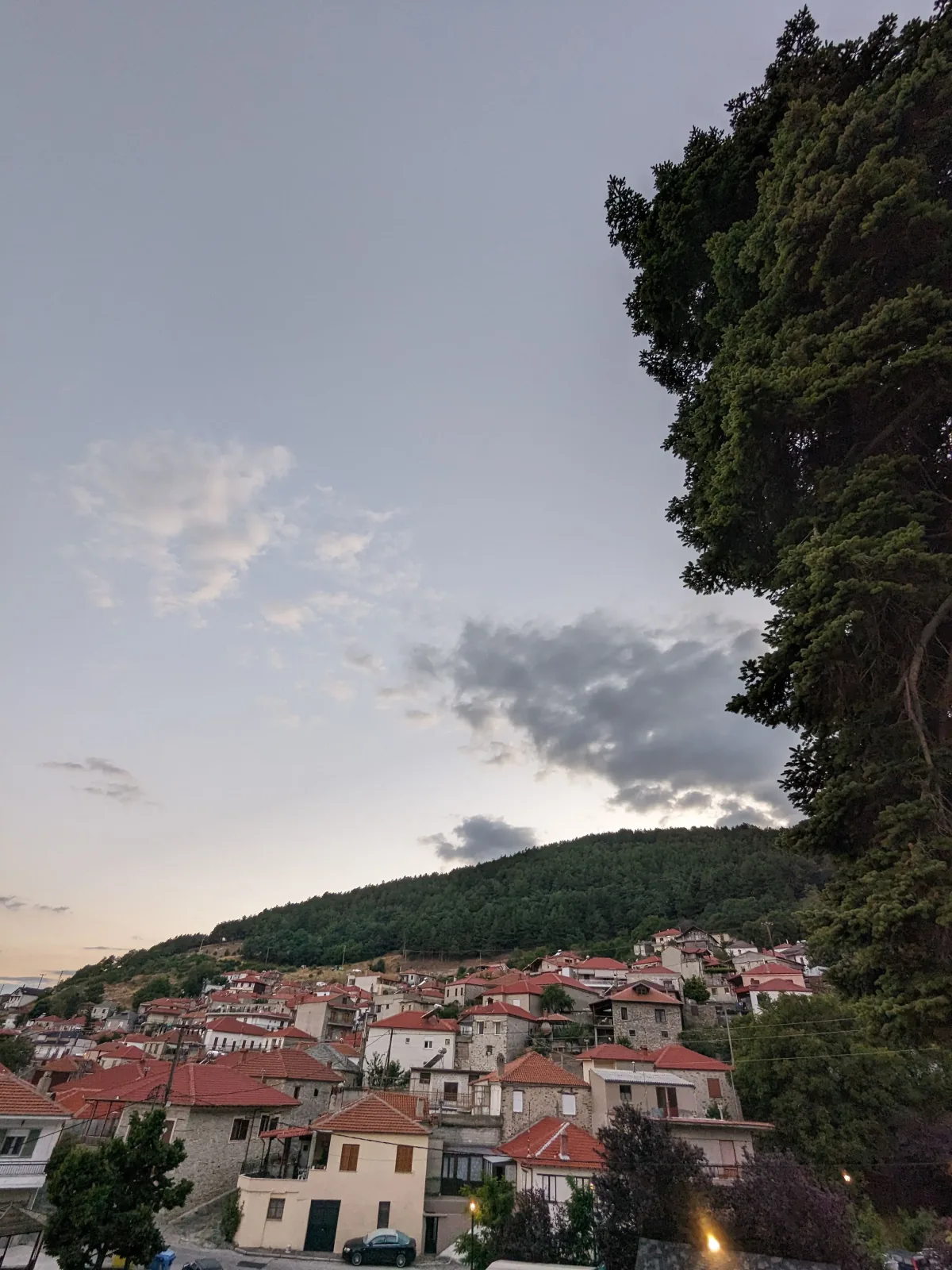
Events & Festivals
From summer panigiri celebrations to seasonal gatherings around the village square, Livadi comes alive with music, food, and community spirit throughout the year.
View Events →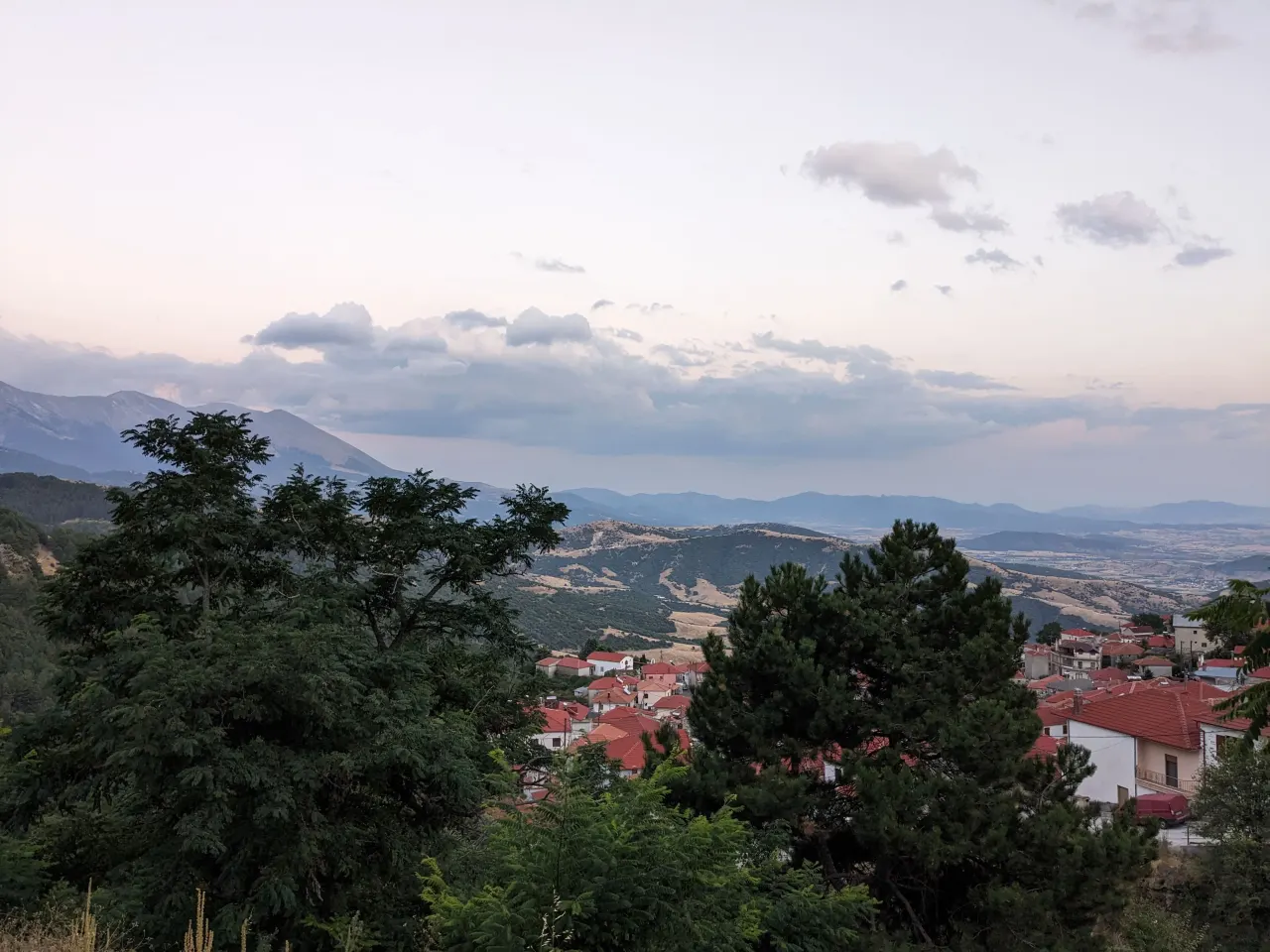
A Vlach mountain village perched at 1,160 metres on the southeastern slopes of Mt Titaros
LIVADI OLYMPOU — HOMETOWN OF GEORGAKIS OLYMPIOS
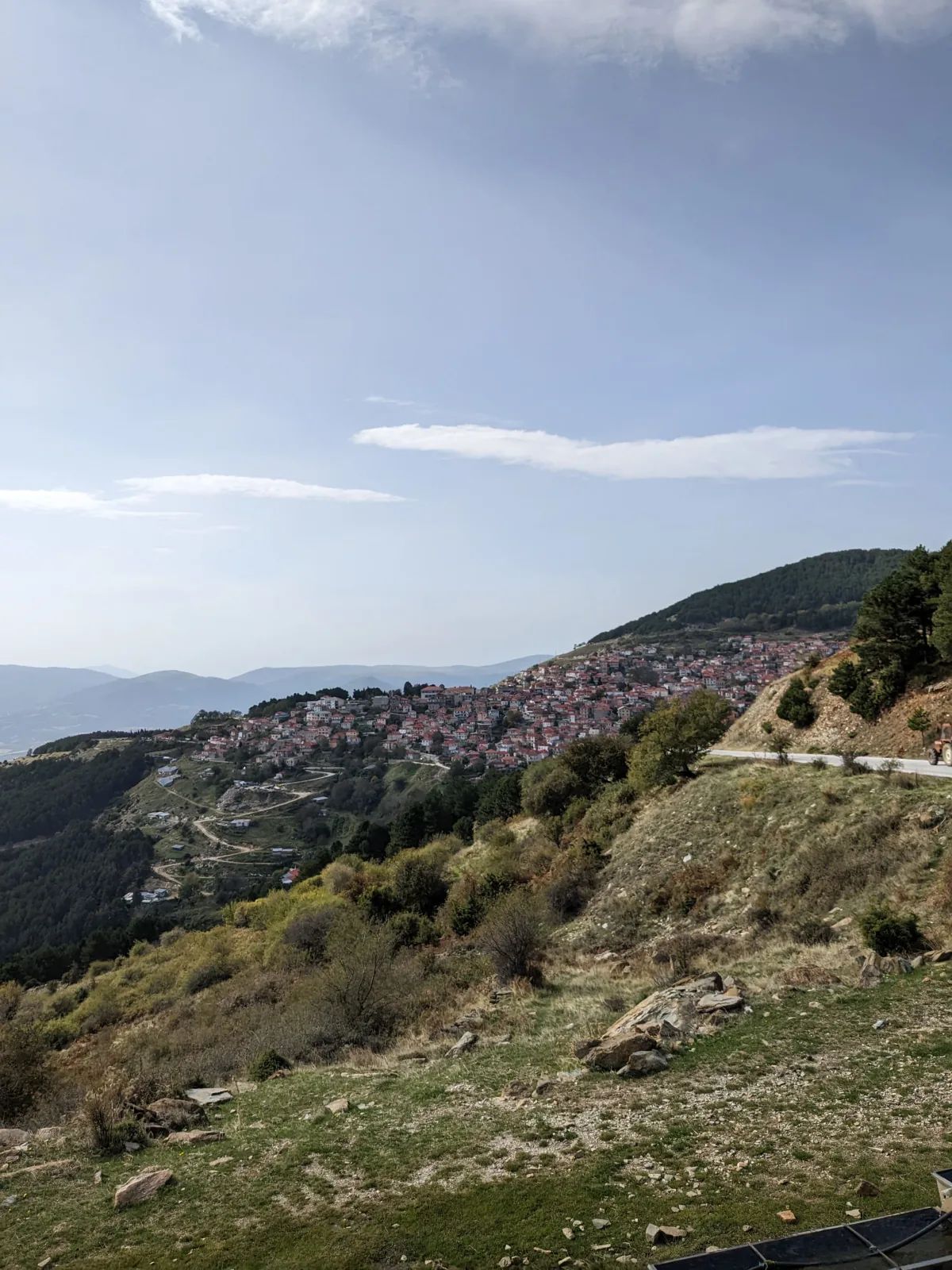
Set between the imposing mountain ranges of Pieria and Olympus, the picturesque town of Livadi sits at 1,200 metres — literally perched on the southeastern slopes of Mt Titaros. Its geography doesn't quite match its name (livadia means "meadows"), but its rare natural beauty and historical heritage justify its reputation completely.
The climate is dry and unusually healthy — harsh winters, mild summers. The inhabitants are, almost without exception, of Vlach origin, and livestock farming is the main occupation. The village produces renowned dairy: Feta Livadiou, kefalotyri, and xynotyri.
Altitude and climate also shape the local tsipouro, which is sought after well beyond the region. If you have a taste for it, come in October or November — distilling season, when the copper stills are boiling and waiting for visitors, alongside the famous Livadiotika klarina (the local clarinet bands).
Hand-woven kilims and woollen fabrics are harder to find now, but they're worth seeking out. The village is also the birthplace of teachers of the Nation, armatoli, martyrs of the 1821 Revolution — most prominently Georgakis Olympios — as well as men of letters, politicians, national benefactors and scientists.
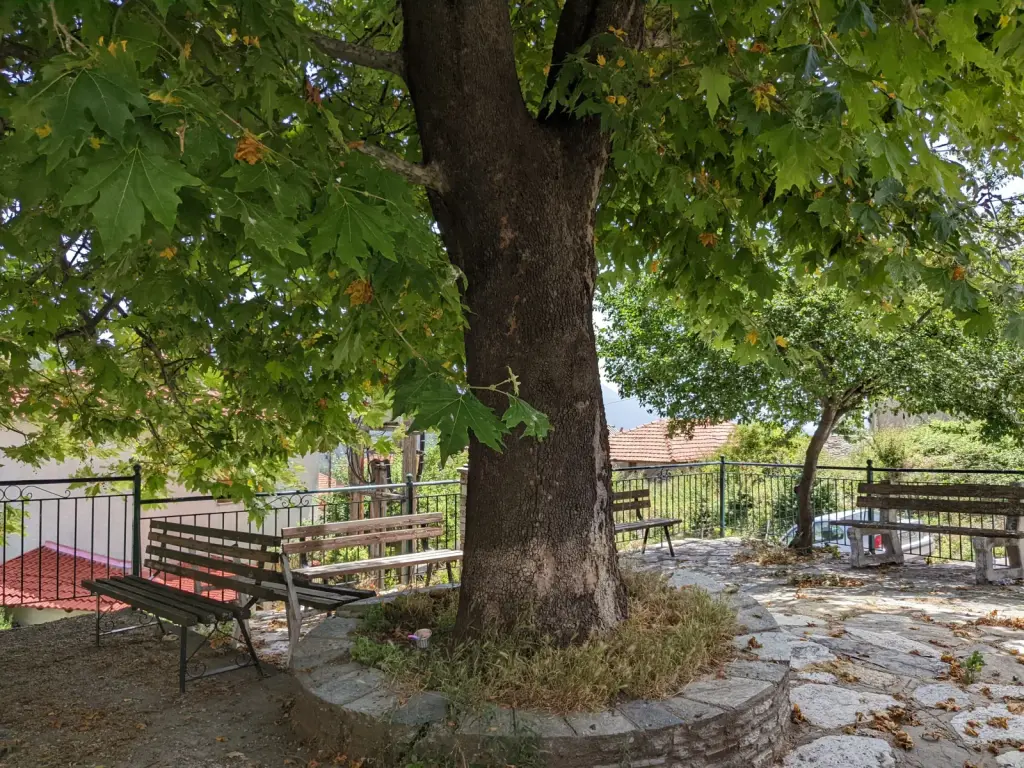
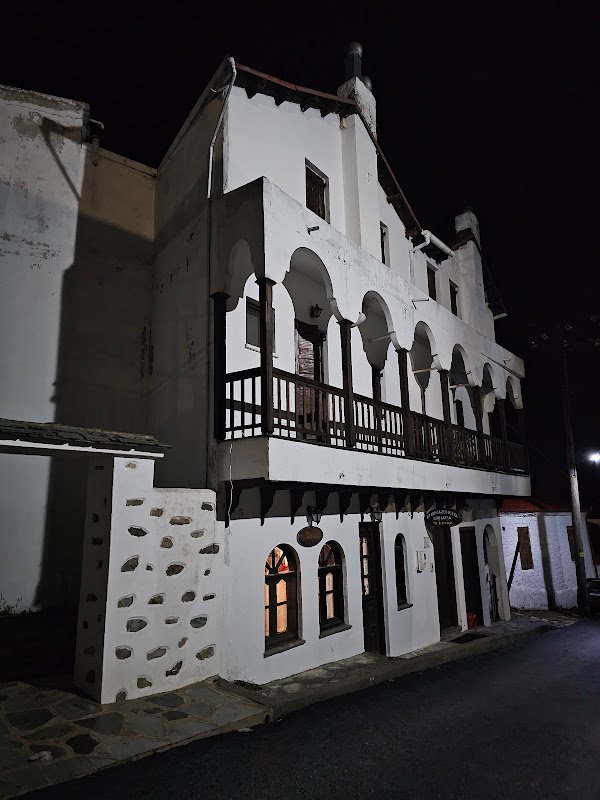
The architecture of Livadi is local. Two-storey houses are built from quarried schist, with thick stone walls that hold warmth in winter and stay cool in summer. Roofs are slate. Lanes are cobbled. Wooden balconies hang over the central square, where the village plane tree — centuries old — shades the old stone fountain. Inside the houses, ground floors were once stables and storerooms; the family lived upstairs.
Walk a few minutes from the square and the village's history is in front of you — churches with carved wooden iconostases, the Holy Trinity monastery from which the 1822 Olympus Uprising began, and the house where Georgakis Olympios was born, on the central square.
SON OF LIVADI
Greek armatolos and a fighter in the Greek War of Independence. Born in Livadi Olympou in 1772, he was a son of the great armatole family of the Lazaioi. He first held the armatoliki of Olympus, based in Livadi; after his break with Ali Pasha, he crossed into Serbia and joined the Serbian liberation struggle.
In 1807 he defeated the Turks at the Battle of Stuvik and fought at the Battle of Ostrovo. The Russians decorated him afterwards and made him a colonel in the Russian army. In 1817 he was initiated into the Filiki Etairia and continued his activity in Serbia.
When the Revolution was declared in Iași, he was appointed general commander of the forces at Drăgășani. After that movement collapsed, he escorted Alexandros Ypsilantis to the Austrian border and withdrew into the Carpathians. He took up a defensive position at the Monastery of Secu in Moldavia and on 23 September 1821 blew himself up by setting fire to the powder magazine rather than surrender.
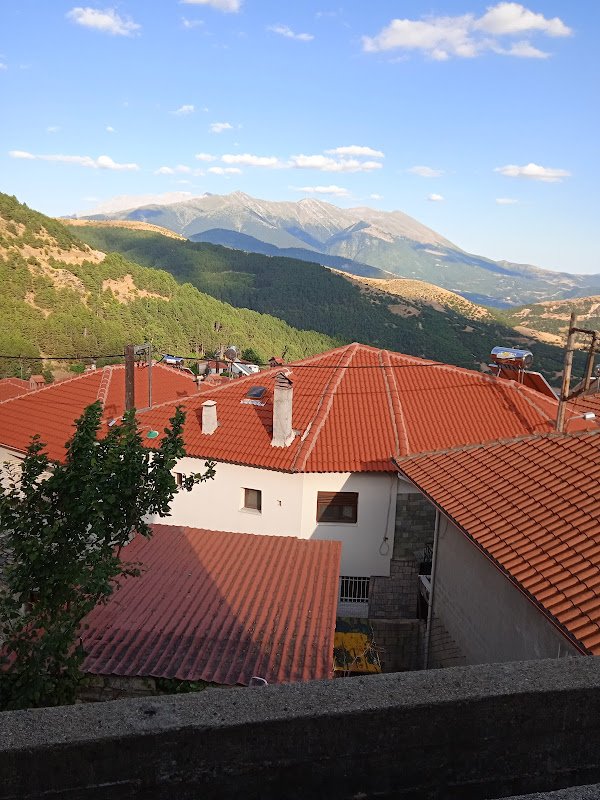
Livadi sits in a natural amphitheatre formed by the mountain ridges, with views that stretch across forested slopes to the distant plains. The village takes its name from the meadows — livadia — that once served as summer pastures for the shepherds who migrated with their flocks between the lowlands and the mountain.
Mt Titaros rises to the west of Olympus and is considered “conjoined” with it — a northwestern extension of the same massif, sharing a single geological root, as Strabo already recorded (Geographica 7a.1). It is to this bond with the “Mountain of the Gods” that the settlement owes its name, Livadi Olympou. That identity took firm hold during the years of Ottoman rule, thanks to the village's leading role in the Armatoliki of Olympus.
The surrounding landscape is a mosaic of beech forests, alpine meadows, and hidden streams. Trails lead from the village into the wilderness of Olympus, offering everything from gentle morning walks to full-day hikes toward the peaks. In every direction, there is something to discover.
What makes Livadi truly special is its people. The village sustains a small but vibrant community that gathers for festivals, tends to the land, and carries forward the customs of their forebears. Visitors are welcomed not as tourists but as guests — invited to share in the rhythms of village life, from morning coffee at the square to evening conversations by the fire.
This is a place where neighbours still look after one another, where doors are left open, and where the stories of the mountain are told and retold with each generation. To stay in Livadi is to become, for a few days, part of something enduring.
From summer panigiri celebrations to seasonal gatherings around the village square, Livadi comes alive with music, food, and community spirit throughout the year.
View Events →
Discover the customs, crafts, and pastoral heritage that have shaped Livadi across centuries — from shepherding traditions to folk music and stone masonry.
Explore Traditions →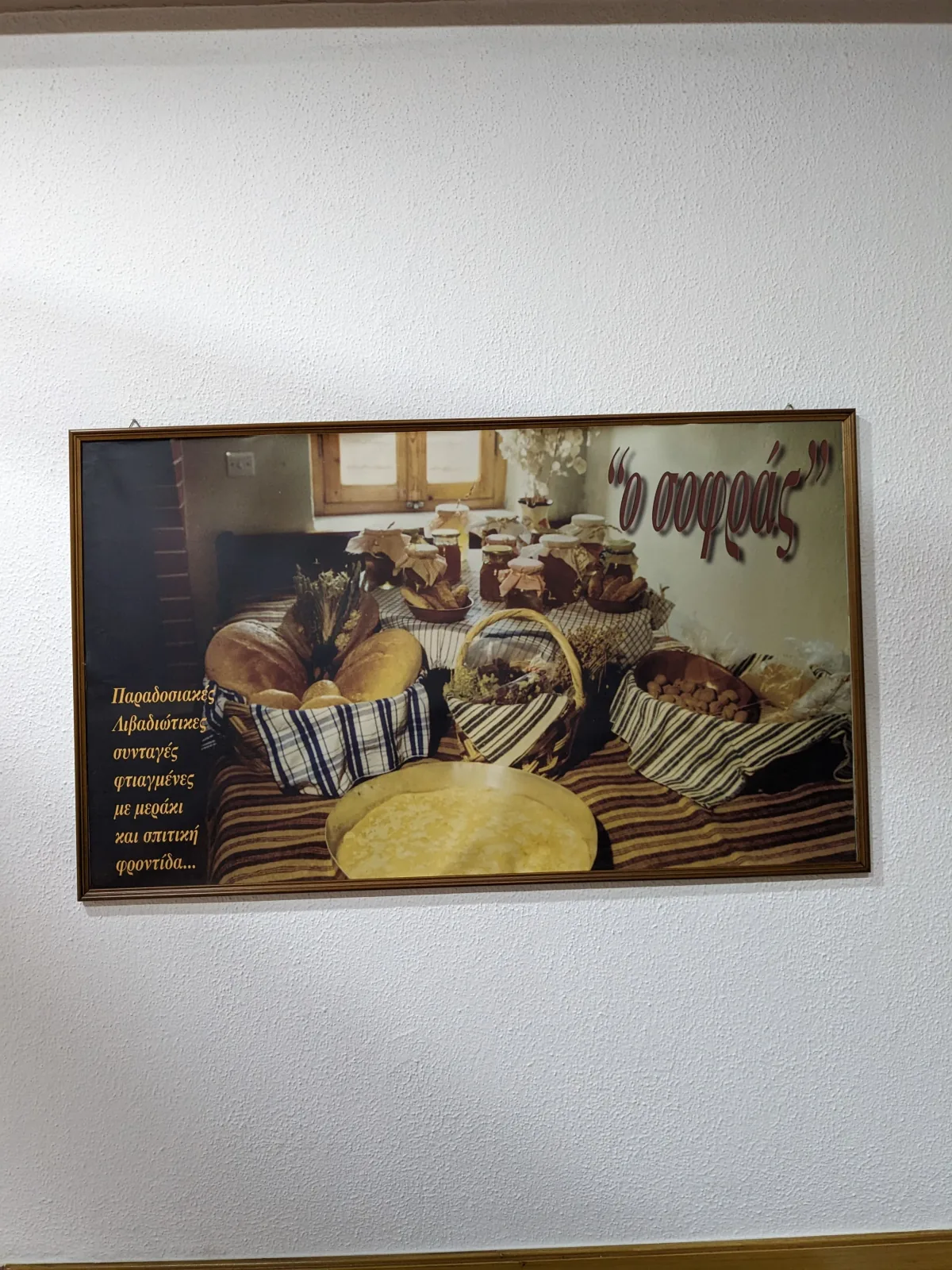
The cuisine of Livadi is inseparable from its landscape — wild herbs, mountain dairy, and recipes passed through generations define every meal.
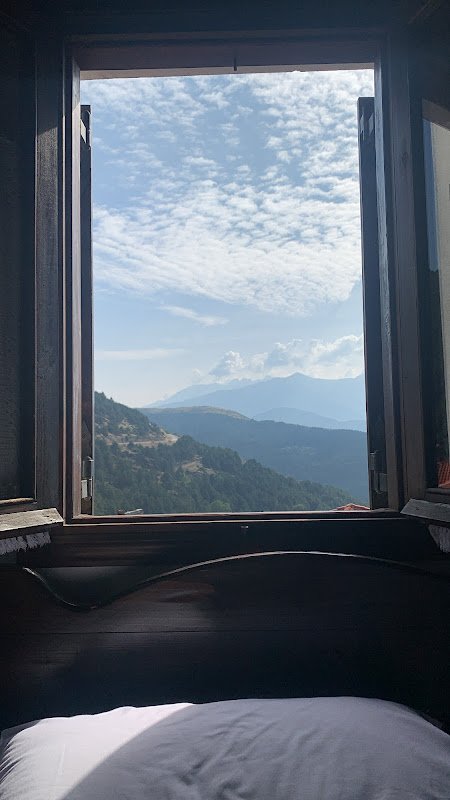
Discover Gastronomy →“Very beautiful rooms with a wonderful view, warm, right next to the village centre. Most importantly the host is an exceptional person. Highly recommended.”
— Andon Cepa · Google · Verified guest review
Stay at Lanari Traditional Guesthouse and discover the hidden village of Livadi on the slopes of Mount Olympus.
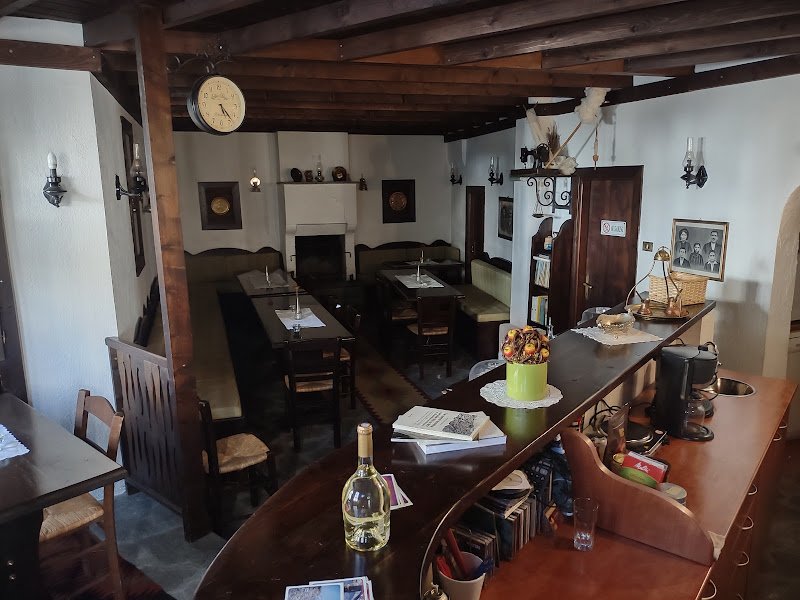
Book Your StayStone houses, the plane-tree square and village life — photographs from our Google Maps listing.
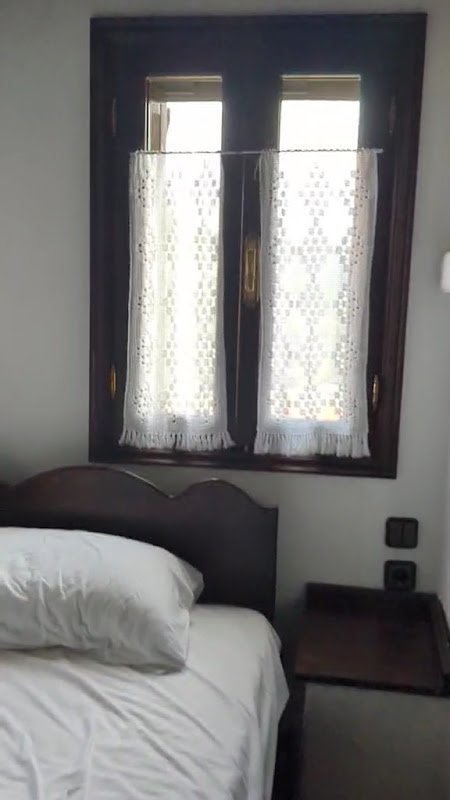
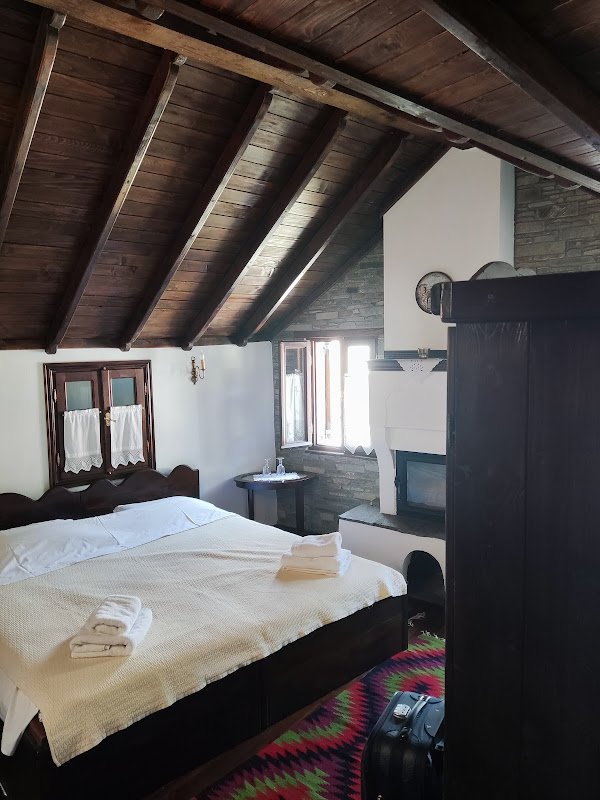
All photos sourced from the Lanari Guesthouse listing on Google Maps. Refreshed 2026-05-25. · See all on Google